
RSS
Book Reviews

Books marked by influenced me to the extent of changing my beliefs and improving my well being. Most of these books resulted in tangible actions which improved my relationship with myself and others. Other books listed below are pretty awesome too. I’ve especially liked books that trace the history of some concept over time, or narrate case studies of real people. Such books have helped me understand the world around me. However, they have not resulted in tangible actions improving my well being.

by Norman Cousins
176 pages, 1991
This book gave me insights into the power of the human mind in healing the body. The book also helped me understand the interplay among medicine, placebos and doctor-patient relationships.
by Peter R Breggin and David Cohen
288 pages, 2000
Over 10% Americans take anti-depressants. Over 10 million children in USA have been prescribed psychiatric drugs like Ritalin and Concerta. Peter Breggin explains the trap of psychiatric drugs: how these do more harm than good, how addictive they are, why they are dangerous and what happens when you attempt to stop taking them. Other books by Peter Breggin (amazon).
by Michael Pollan
256 pages, 2009
by H Gilbert Welch, Lisa Schwartz and Steve Woloshin
248 pages, 2011
by David Servan-Schreiber
274 pages, 2009
by Russel Blaylock
304 pages, 2003
by Art Brownstein
320 pages, 2001
Art emphasizes the mind-body connection, saying that the vast majority of back pain is muscular, and that stress sends signals to muscles to tighten up and become stiff; such stiffness leads to pain. While acute pain is best handled by short term measures like rest and possibly medications, chronic pain can be managed only by long term commitment to daily ‘stretching’ exercises and meditation-style deep relaxation exercises. The book has chapters on food and stress reduction as well.
by Alfred Adler
1927
by Alfred Adler
300 pages, 1931
One of the three founding fathers of modern psychology, along with Freud and Jung. Adler’s insights into human behaviour can be absorbed through these two books. The role of childhood difficulties and birth order in shaping personality are explained well. Adler’s philosophy is grounded in Gemeinschaftsgefuhl which means “social interest” or “communal feeling”. Adler was confident that anybody could be cured of mental illness in just fourteen days if the patient agreed to do something for someone else every day for a fortnight! This resonates strongly with Eastern ideas of ‘Seva’ (service before self) as a means to curing psychosomatic problems.
by Anthony Pratkanis and Elliot Aronson
432 pages, 2001
Written by two psychologists in plain English. It explains techniques employed by individuals, advertizers and mass media to influence us. Many examples from psychological studies are quoted.
by James Pennebaker
249 pages, 1997
This is a gem of a book, packed with psychological insights. The book summarizes Pennebaker’s research into self disclosure through writing and speech. For over twenty years, Pennebaker studied how verbalizing a traumatic experience through writing, journalling, confessions and speaking to strangers (cab drivers or co-passengers in an aeroplane) heals. Pennebaker heads the Department of Psychology at UT Austin.
by Keith Russell Ablow
320 pages, 2007
Keith Ablow has over twenty years experience in clinical psychotherapy. Modern Western psychology asserts that childhood experiences, especially the family eco-system (parents and siblings), greatly influences personality. Many psychosomatic ailments are caused by burying painful memories inside us, not accepting them, not letting go of them. Through many case studies, Ablow showcases his philosophy and clinical techniques for revisiting painful moments in one’s life with a therapist. By seeing one’s past experiences from a third person’s perspective, one gains self-understanding and gets healed.
by Sonja Lyubomirsky
384 pages, 2007
A nice book on positive psychology with essays on 12 different techniques for increasing one’s happiness level. This is among the best books in its genre. Each technique is illustrated with practical advice. Many psychological studies are cited throughout the book. “Positive psychology” breathes fresh air into the realms of psychology & psychiatry. Historically, these branches of knowledge have focused on the severely ill to build models of human behaviour. Positive psychology takes the opposite approach: it studies healthy individuals to discover techniques that others could absorb for improving their quality of life. Sonjya Lyubomirsky is a Professor of Psychology at UC Riverside. Book review by me (6 July 2008).
by John M Yates and Elizabeth S Wallace
194 pages, 1984
Explains a specific technique for hypnosis in detail, along with its clinical uses in pain management, weight loss, smoking deaddiction and addressing sexual problems. Book review by me (30 June 2008)
by Elisabeth Kübler-Ross and David Kessler
256 pages, 2007
Essays on myriad emotions and situations faced by a grieving person. Very nicely written. Kübler-Ross (1926-2004) was a Swiss-born psychiatrist who derived the well-accepted five-stage model of grief (denial, anger, bargaining, depression and acceptance). For over forty years, she worked for the terminally ill. Book Review by me (12 October 2008).
by John W. James and Russel Friedman
192 pages, 1998
The book describes a specific technique for recovering from grief with step by step instructions. A remarkable approach. Recommended for anybody who has suffered loss.
by Peter Winkler
160 pages, 2007
by Thich Nhat Hanh
140 pages, 1999
High quality book that explains how to incorporate meditation into our daily lives. The beauty of the book lies in its depth of ideas presented in simple language. For me, this book is special — just reading the first few chapters of this book makes me feel calmer.
by Daniel Goleman
240 pages, 1996
A comparison of meditation techniques from various traditions. Quite illuminating. Daniel Goleman was a Professor of Psychology at Harvard in 1970s. He then spent many years with spiritual masters in India, then returned to the West to write books like Emotional Intelligence (1997).
by Wu Wei
162 pages, 2004
A collection of 81 insightful sayings along with short passages that explain the sayings. Book review by me (4 August 2008).
by Gilbert Highet
288 pages, 1954
This book is inspiring. It sets very high standards for teachers of any kind.
by Shinichi Suzuki
108 pages, 1996
This is a beautiful book, written as a series of short essays, each essay describing an episode in the personal life of Shinichi Suzuki, who is now famous for the Suzuki method of teaching the violin to kids.
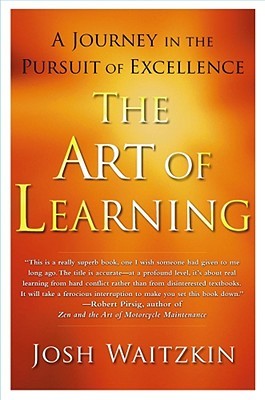
by Josh Waitzkin
288 pages, 2008
This book has many insights into high performance. Suited for practitioners of any art or discipline.
by David Whitsett, Forrest Dolgener and Tanjala Kole
304 pages, 1998
This book emphasizes the emotional and psychological aspects of training for and completing a marathon. Each chapter has an idea drawn from positive psychology that is applied in a goal-oriented fashion. Each chapter also contains snippets of personal experiences by students showcasing how they absorbed these techniques into their life.
by W Timothy Gallwey
160 pages, 1997
Instantly popular when first published in 1974, this book is indeed a classic. Both students and coaches will benefit by learning leadership skills and techniques for self improvement that go beyond tennis.
by James Henslin
624 pages, 2007, 14th Ed
Summary: A collection of articles by acclaimed sociologists in plain English. This book is now in its 14th Edition in thirty-five years. It gives glimpses into myriad facets of human behavior. Some of the articles might surprise you.
by Patricia Uberoi (editor)
512 pages, 1994
A collection of essays by reknowned anthropologists on family structure and marriage systems in various parts of South Asia. I was introduced to the wide spectrum of marriage systems practiced within India until the 1950s!
by Robert L. Heilbroner
7th Edition, 368 pages, 1999
The history of modern economics is presented in simple English through narration of the lives and contributions of economists like Adam Smith, Karl Marx and John Keynes. The book does not pause to explain economic terms like money supply and inflation. Thus it complements an introductory course in Economics by providing historical context for economic ideas. I found the first 40 pages very interesting: a whirlwind tour of how the wheels of industrial revolution were set in motion, how the ideas of ‘innovation’ received social acceptance, how land became commodity and how ‘making profit’ was gradually accepted by Christianity.
by John L Casti
592 pages, 1990
The book traces the history of six popular debates in the West: Origin of Life, Language Acquisition, Sociobiology and Genetic Determinism, Artificial Intelligence, The Search for Extraterrestrial Intelligence, and the Mysteries of Quantum Physics. The book shows how opinions have swayed between polar opposites without any resolution for two thousand years. What I learnt from this book is that the many of these debates have no resolution — these debates demonstrate co-existence of opposites in the human experience, and the limitations of rational thinking to capture reality. The book is packed with facts and details, not an easy read. However, it would form a good starting point to get an overview of any of the six topics it discusses. For example, you could read the chapter on Language Acquisition before delving into Noam Chomsky or Steven Pinker’s writings for specific viewpoints.
by George Gheverghese Joseph
400 pages, 1992
A book that explains how mathematics developed in various cultures: Egypt, China, India, Africa and Europe. Readers who are accustomed to Eurocentric history of Mathematics (Greeks — Dark Ages — Renaissance) shall be pleasantly surprised at how much of modern mathematics was developed by non-Europeans.
by William Durant and Ariel Durant
117 pages, 1968
This book showcases insights developed by the Durants after 40 years of writing European history under the title The Story of Civilization – 10 Volume Set (I have not read these volumes). The 10-volume set gets rave reviews for its humane treatment of historical characters. And Lessons of History has insights like ‘Freedom and equality are inconsistent goals for society’. The only wrinkle in the book is the strong influence of Darwinism on Durants’ thinking.
by Marshall B. Rosenberg
222 pages, 2003
by Jon Gottman
288 pages, 2000
by Richard Lewontin
144 pages, 2000
A collection of essays for understanding limitations of modern biology, especially the ‘genes are everything’ model. The genes of an organism and the environment influence each other in complex ways. Choosing the environment to be the independent variable and genes to be the dependent variable is a matter of convenience.
by Will Durant
1926
The book traces the history of European philosophy. Descriptions of ideas generated by various philosophers are interwoven with descriptions of their personalities and their social and political circumstances to show how they influenced each other.
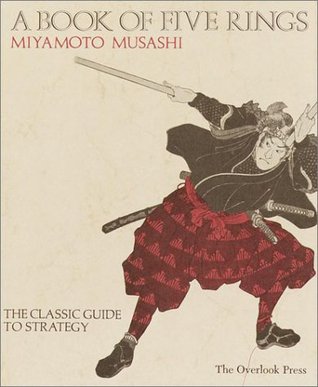
by Miyamoto Musashi
160 pages, 2002
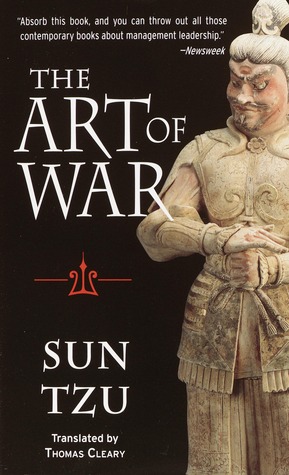
by Sun Tzu, translated by Samuel B Griffith
224 pages, 1971
I was amazed at the scope and depth of thinking underlying the Art of War. Like many ancient books, the original is a collection of short passages, which later writers expanded through examples. The Art of War has general principles on strategy that have been adoped by both business managers and sports coaches. Art of War (wikipedia) is high quality.
by George R Stewart
1st Ed, 1971
A gripping narrative of the Donner Party that was trapped in snow and storms in the Sierra Nevada in 1846.
by Caroline Alexander
224 pages, 1998
An extraordinary survival story of 27 men trapped in Antarctica for 20 months in 1915-1916.
by Edward Tufte
2nd edition, 197 pages, 2001
by Edward Tufte
213 pages, 2006
by Edward Tufte
126 pages, 1990
by Edward Tufte
156 pages, 1997
Edward Tufte’s books are a must-read for anybody who ever draws a graph in any presentation. His books have large fonts and are full of graphics. So you may easily finish reading a 300-page book on a weekend. An interesting tidbit from Tufte’s book is that the graph format that we take for granted today (plotting two variables on X and Y axes) was first conjured by William Playfair in 1786. You might also enjoy reading The Cognitive Style of Power Point (32 pages, 2006) by Tufte. This book highlights the great shortcomings of Power Point as a tool for making presentations, a must-read for speakers.
by Pearl S Buck
368 pages, 1931
The story of a family through famine, abject poverty and riches. The description of famine, hunger and poverty left quite an impression on me when I read the book in 1990. Pearl S Buck won the Pulitzer Prize for this work in 1932.
by Jhumpa Lahiri
208 pages, 2000
A collection of nine short stories on Indian immigrants in USA, caught between two different cultures. For this book, Jhumpa Lahiri won the Pulitzer Prize for Fiction in 2000.
by Benjamin Spock
992 pages, 2004
A Bible for childcare.
by Jane D Nelsen
384 pages, 2006

by John Kenneth Galbraith
164 pages, 1979

History of Happiness by Darrin McMohan.

  • Ravi Gampala

    Deat Gurmeet – You might check ‘The Art of Happiness’ as well. Seemingly the book talks about topics we are all familiar, but presents it nicely. I had difficult period in life when this book was very helpful. So much was its influence that I read several of Dalai Lama’s books afterwards (Healing Anger was one of very good books as well).

    There is a series of three books written by Swami Vivekananda on Karma Yoga, Bhakti Yoga, Raja Yoga, Jnana Yoga (most difficult to read and follow, but captivating book). I found all these four books to be an absolute delight to read.

    Best,
    Ravi

  • http://infolab.stanford.edu/~manku Gurmeet Singh Manku

    Thanks a lot, Ravi!

    I perused through Dalai Lama’s books in 2007–2008. His books are wonderful, in very simple language. Many of these are available in county and city libraries in California.

    A close friend of mine pointed me to Karma Yoga in 2008. I should re-read that book, making notes this time. Swami Vivekananda’s books are online: Vivekananda Library Online and Complete Works of Swami Vivekananda

  • http://connect2ppl.wordpress.com connect2ppl

    ” Thinking Mathematically ” by John Mason et.al

    http://www.amazon.com/Thinking-Mathematically-J-Mason/dp/0201102382

    Very help for kids, bcoz it is then one should learn good practices, develop right attitude towards various stages of problem solving.

    I am sure you, Gurmeet, does not need this book(except for serving as another source for puzzles ). But felt that your blog is right place to advertise this book.

© Copyright 2008—2011, Gurmeet Manku. All Rights Reserved.